
Form 26AS is gone? What ITA 2025 actually says about Form 168 and your TDS credits
NRI WhatsApp groups claim Form 26AS has been abolished and your TDS credits wiped. Not true. Under the Income-tax Act, 2025, your consolidated tax statement is simply renumbered Form 26AS to Form 168 — same content, same legal weight. The real risk is that NRIs under-claim TDS by never reconciling what was deducted against what the statement shows, and a renumbering year is when those mismatches multiply. This guide explains exactly what Form 168 is, why NRO and property TDS go unclaimed, and the step-by-step reconciliation against Form 168, AIS and TIS before the 31 August 2026 deadline.
Harun Raaj
Chartered Accountant · Harun Raaj & Associates
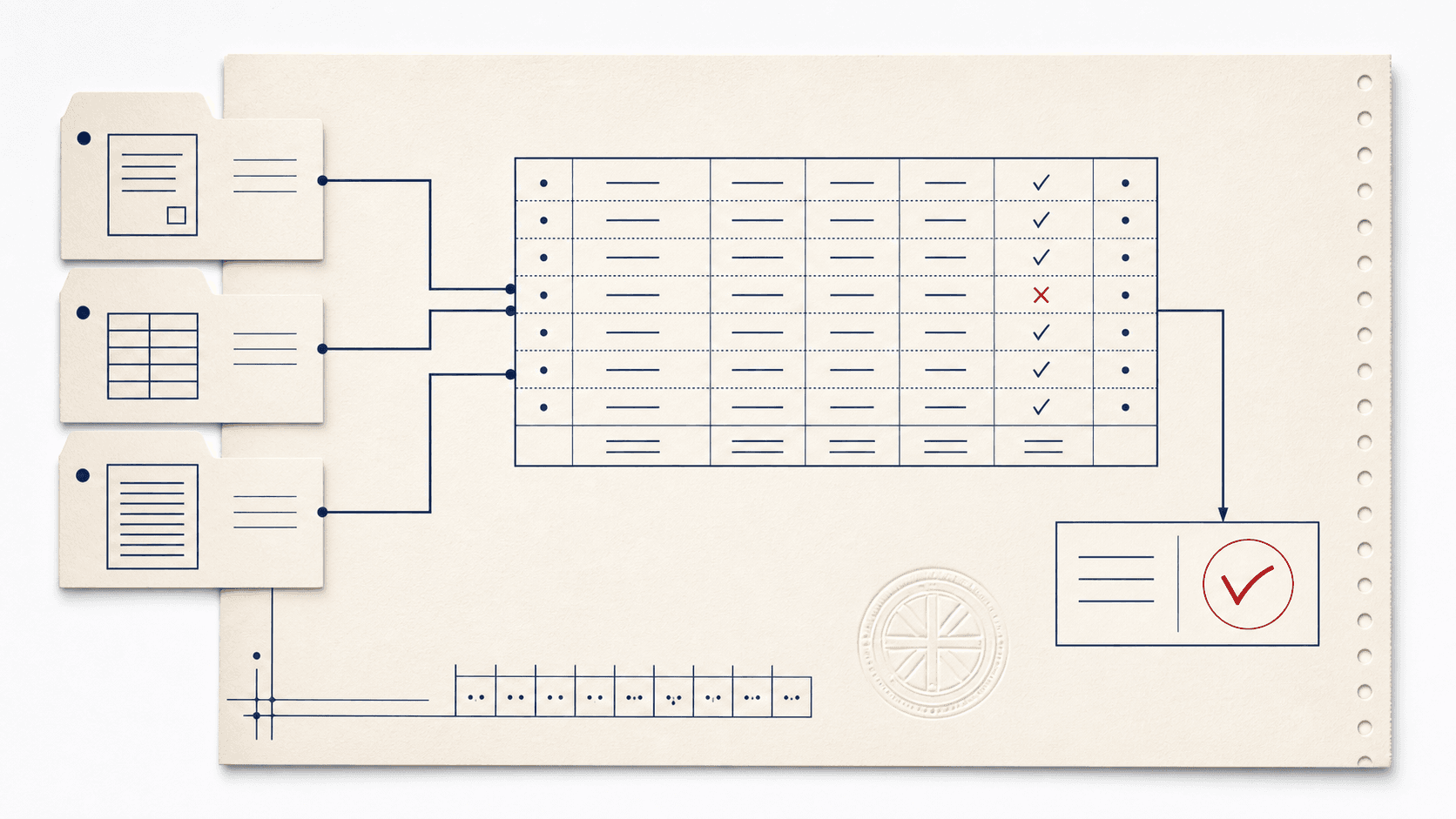
A claim doing the rounds in NRI WhatsApp groups says Form 26AS "no longer exists" under the new law and that you should now download "Form 168" instead, or worse, that your old TDS credits have somehow been wiped clean and you must re-file. None of that is true. Form 26AS — your consolidated tax statement — has been renumbered, not abolished, and the credits sitting in it are the same credits you have always been able to claim. The danger is not that the form vanished. The danger is that NRIs routinely under-claim TDS because they never reconcile what was actually deducted against what the statement shows, and a renumbering year is exactly when those mismatches multiply.
What the law actually says
Under the Income-tax Act, 1961, your annual tax credit statement was Form 26AS, generated under Rule 31AB and later Section 285BB. It pulled together every rupee of TDS deducted against your PAN, TCS collected, advance tax and self-assessment tax paid, and details of specified financial transactions reported by banks and registrars.
Under the Income-tax Act, 2025, which took effect from 1 April 2026, that same consolidated annual statement is now designated Form 168. The statutory home for it is the Section 285BB-equivalent provision in the new Act. The content, the purpose, and the legal weight are unchanged — it is a renaming and renumbering exercise, part of the same cleanup that turned Form 15CA into Form 145, Form 15CB into Form 146, and replaced the twin "Previous Year / Assessment Year" language with a single Tax Year.
Two points the WhatsApp version gets wrong. First, Section 6, which decides whether you are a resident, non-resident, or RNOR, is the same in both Acts — your residential status is not affected by any of this renumbering. Second, your TDS credit is not created by Form 26AS or Form 168 at all. The credit arises when tax is deducted on your income; the form is only the evidence of it. So even in a transition year, no credit is lost simply because the form changed its number. What you must do is make sure every deduction actually reached your statement.
Alongside Form 168, the Annual Information Statement (AIS) continues to operate. The AIS is the wider, more granular feed — it shows interest paid by each bank, dividends, securities transactions, and the rest — and it is the document most likely to contain an error that costs an NRI money.
It helps to be precise about what each document is for, because the WhatsApp confusion mostly comes from treating them as interchangeable. Form 168 is the consolidated tax-paid statement: it answers "how much tax has been credited against my PAN?" The AIS is the income-and-transactions feed: it answers "what income did third parties report against my PAN?" The TIS (Taxpayer Information Summary) is a condensed, category-wise roll-up of the AIS that the system also uses to pre-fill your return. When you file, the credit you claim must trace back to Form 168, but the income you declare must be consistent with the AIS and TIS — and an NRI who reconciles only one of the three is the NRI who later receives a notice.
Practical implications for NRIs
NRIs are structurally more exposed to TDS mismatches than residents, for reasons that have nothing to do with the new Act:
NRO income is taxed at the highest slab at source. Interest on your NRO account and rent on Indian property are deducted at 30% plus surcharge and cess under the Section 195 regime. If your actual liability is lower — because your total Indian income is modest, or a DTAA caps the rate — the only way to recover the excess is to claim the full TDS credit in your return and collect a refund. Under-claim by even one entry and you simply hand that money to the government.
A single PAN error breaks the chain. When a tenant or bank deducts tax but quotes your PAN incorrectly, or files their TDS return late, the credit never lands in your Form 168. You will see the money gone from your payout but absent from your statement. Example: a tenant deducts ₹90,000 across the year on ₹3,00,000 of rent but files only two of four quarterly TDS returns. Your Form 168 shows ₹45,000. Claim ₹90,000 and you get a mismatch notice; claim ₹45,000 and you have quietly lost ₹45,000.
Property sales generate the largest single mismatches. When you sell Indian property, the buyer must deduct TDS under Section 195 on the sale consideration. On a ₹1.2 crore sale, that can be ₹13–15 lakh or more. If the buyer files the TDS return wrongly — wrong PAN, wrong section, wrong amount — your Form 168 will not reflect it, and a sum that large is not something you discover comfortably after the fact.
The reconciliation window is tight. For Tax Year 2025-26, the non-audit filing due date is 31 August 2026 (audit cases run to 31 October 2026). TDS for the January–March quarter is typically filed by deductors in May, so Form 168 stabilises only weeks before you file. Leave reconciliation to the last day and there is no time left to chase a deductor for a correction.
Time zones and access make the chase harder. A resident can walk into a bank branch or call a tenant the same afternoon. An NRI reconciling from Dubai, London, or New Jersey is dealing with a deductor several time zones away, often through an intermediary such as a property manager or a relative holding power of attorney. That friction is the real reason NRI credits go unclaimed — not the law, but the practical difficulty of getting a deductor to file a correction return from abroad. The fix is to start early and to put every request in writing, so a correction can be tracked rather than re-explained on each call.
Step-by-step: what to do
- Download all three documents together. Log in to the income-tax e-filing portal and pull your Form 168 (the consolidated statement, formerly Form 26AS), your AIS, and your TIS (Taxpayer Information Summary). Reconcile across all three — never rely on one alone.
- Build your own deduction ledger first. Before you even open the statement, list every Indian income stream and the TDS you expect: NRO interest (bank certificates / Form 16A), rent (tenant's deduction), capital gains (buyer's or broker's deduction), dividends. This is your control total.
- Match line by line against Form 168. Compare your ledger to the statement entry by entry. Flag three things: entries present in your ledger but missing from Form 168, entries where the amount differs, and entries with the wrong assessment/tax year tagging.
- Chase the deductor for any gap. A missing or wrong entry is almost always a deductor-side filing error. Contact the bank, tenant, or buyer and ask them to file a correction (revised) TDS return quoting your correct PAN. Only the deductor can fix this; you cannot self-correct another party's filing.
- Fix wrong AIS entries through feedback. If the AIS shows income that is duplicated, misclassified, or not yours, submit feedback directly in the AIS interface ("Information is duplicate", "Income is not taxable", etc.). This creates a documented trail before you file.
- Claim the correct, reconciled figure — then file. Enter TDS credits in your ITR-2 schedule that match Form 168. Where a genuine deduction is missing because of a deductor's lag, decide deliberately whether to wait for the correction or file and revise — do not silently drop the credit.
- Keep the evidence for the carry-forward rule. If TDS appears in Form 168 but the corresponding income is taxable in a different tax year, you can carry the credit forward and claim it in the year the income is assessed. Hold on to the deductor's TDS certificate (Form 16A) and your reconciliation notes; for property and large NRO deductions, this paper trail is what protects the claim if the system entry lags.
For your specific situation, book a consultation at harunraaj.com
A renumbering year is precisely when TDS credits slip through the cracks, and for NRIs the amounts at stake — NRO deductions at 30%, property TDS in lakhs — are large enough that a single unreconciled entry is worth real money. If your Form 168 and AIS do not agree, or a deduction you know happened is not showing, book a consultation at harunraaj.com and we will reconcile it before your 31 August 2026 deadline.
---
See Also
Frequently Asked Questions
Is Form 26AS abolished under Income-tax Act 2025 and replaced by Form 168?
No. Under the Income-tax Act, 2025 (effective 1 April 2026), Form 26AS has been renumbered to Form 168 under Section 285BB-equivalent provision. The content, purpose, and legal weight remain unchanged. This is a renaming and renumbering exercise, similar to Form 15CA becoming Form 145 and Form 15CB becoming Form 146, as stated in the section 'What the law actually says'.
Will my TDS credits be lost if Form 26AS is renumbered to Form 168?
No. TDS credits are not created by the form itself—they arise when tax is actually deducted on your income. Form 26AS (now Form 168) is only the evidence of the credit. The form change does not wipe clean any credits. However, you must ensure every deduction actually reached your statement by reconciling what was deducted against what the form shows, as explained in the opening section.
How is my residential status affected by the renumbering from Form 26AS to Form 168?
Your residential status is not affected at all. Section 6 of the Income-tax Act, 1961, which determines whether you are a resident, non-resident, or RNOR, remains the same in the Income-tax Act, 2025. The renumbering of Form 26AS to Form 168 has no bearing on residential classification, as stated in the 'What the law actually says' section.
What is the statutory basis for Form 168 under the new Income-tax Act?
Form 168 is designated under Section 285BB-equivalent provision in the Income-tax Act, 2025. It serves the same purpose as Form 26AS did under Rule 31AB and Section 285BB of the Income-tax Act, 1961—consolidating all TDS deducted, TCS collected, advance tax, self-assessment tax paid, and specified financial transaction details reported by banks and registrars against your PAN.
What should NRIs do to avoid losing TDS credits during the Form 26AS to Form 168 transition?
NRIs should reconcile what was actually deducted against what the consolidated statement (Form 168) shows. The article warns that a renumbering year is exactly when mismatches multiply because NRIs routinely under-claim TDS by failing to reconcile these details. Verifying that every deduction reached your statement is critical.
Is the Annual Information Statement AIS still available alongside Form 168?
Yes. Alongside Form 168, the Annual Information Statement (AIS) continues to operate. The AIS is the wider, more granular feed that provides detailed transaction-level information, as noted in the final section of the article.
Go deeper with our hub guides
Statute-cited, section-by-section guides covering the same ground this article does.
Need help with this?
Our team handles the paperwork. You focus on your business.